DeskScience
Discovery, climate and the natural world
To reduce nitrogen pollution stemming from synthetic fertilizer and livestock waste, California's Central Valley relies on five data sets to estimate surplus nitrogen. However, most parts of the United States use just one or two data sets—the U.S. Department of Agriculture's agricultural survey and…
Researchers at Penn Dental Medicine have uncovered a previously unknown molecular mechanism by which bacteria rapidly compromise the body's protective barriers, a finding that could reshape how scientists approach a wide range of serious diseases.
Most DNA in an organism is inherited from its parent or parents. This form of genetic inheritance is referred to as vertical inheritance because genes are passed down from generation to generation.
Living materials created with a 3D printer are like living tissues with one notable exception: You get to choose exactly which cells are in them, as well as their final 3D shape. Depending on the type of bacteria included in the print, the material can clean up contaminated water or break down…
An international team of scientists working with Queensland Museum's CoralBank project has uncovered previously hidden coral diversity on Australia's east coast, revealing that 12 corals once considered variations of other species are distinct species in their own right.
Extra time on assignments. Frequent breaks. A quiet place to work. For students with attention-deficit/hyperactivity disorder (ADHD), these are some of the most common accommodations schools provide to make learning easier. But are they actually helping children succeed? A new study from Florida…
Dogs, having lived alongside humans for tens of thousands of years, are keenly tuned in to our emotions. Behavioral experiments, brain studies and even measurements of heart rate all suggest dogs respond differently depending on the emotional expressions they encounter in humans.
They say opposites attract, and many couples do fit this pattern. One is pragmatic and down-to-earth, while the other is a dreamer with their head in the clouds. Yet, these differences make them perfect for each other. According to researchers at ICFO, chemical interactions between atoms are not…
Kai Wright of the Guardian podcast Stateside will speak with author and environmentalist Bill McKibben – and we’d like to hear your questions
It probably walked on two legs and weighed about 400 kilograms (880 pounds), despite still being a youngster. Meet Nyana rooiwalensis, a newly identified dinosaur species that lived more than 200 million years ago in what is now South Africa.
Elon Musk’s company will try to grab both parts of the rocket for the first time.
Mercury contamination presents an obvious challenge: it is invisible. A glass of water or a piece of fruit can seem perfectly normal to the naked eye, even when trace amounts of toxic mercury are present. Detecting such minute levels usually requires specialized laboratory tools and trained experts.
Researchers at University of Tsukuba and collaborating institutions have identified short antimicrobial peptides derived from Nemuri, a sleep-inducing protein in the fruit fly Drosophila melanogaster. The research is published in the journal Nature Communications.
For around 10,000 years, humans have selectively bred sheep for desirable traits. Generation after generation, we have chosen animals for their wool, size and reproductive characteristics and gradually left our mark on their DNA.
Surface rocks can reveal records of regions they occupied millions of years ago, even if those areas were kilometers below ground. On Türkiye's Marmara Sea's southern shores and islands, granitic rocks that are now exposed originated as molten material deep in Earth's crust.
What makes the human brain so much larger and more complex than the brains of many other mammals? Scientists have long sought clues in our DNA. Some discoveries show how genetic changes enable the developing brain to produce more cells. Others help explain how long those cells can continue to…
Mountain ranges grew higher throughout Earth's history in two distinct "spurts" that correlated with the flourishing of biological diversity on our planet, according to new research published in the journal Science Advances. The study suggests mountains may have played a key role in sparking…
El Niño winters typically bring more rain in the southern USA and drier, warmer conditions further north but the impacts on snowfall are complex.
A team of astronomers recently identified a red giant star with an unseen binary companion after examining data from the Large Sky Area MultiObject Fiber Spectroscopic Telescope (LAMOST) and the Apache Point Observatory Galactic Evolution Experiment (APOGEE). Although the companion object can't be…
The ocean has been absorbing carbon dioxide from fossil fuel emissions at an increasing rate since 1990, while the net uptake of carbon by forests, soils and other land ecosystems has not grown, according to a new study led by scientists at UC San Diego's Scripps Institution of Oceanography.
A technology that significantly improves ethanol gas sensing performance by combining five different metal elements in a single oxide has been developed.
The European Union has pledged to defend scientific research at the Cop31 climate summit in Turkey, accusing some countries of attempting to undermine the world's leading authority on global warming amid a growing dispute over the publication of crucial climate reports.
Cement hardens when mixed with water, allowing it to form solid structures even in wet environments. This property is known as hydraulicity. Reproducing this property in organic polymers has been challenging, as polymer materials that react with moisture often lack the combination of bulk curing…
Climate change could force more than 200 million people from their homes even as countries spend billions on securing their borders, the head of the U.N.'s migration body said Friday.
Two new studies involving Newcastle University marine scientist Dr. Theresa Rueger have highlighted how the tusked goby's relationship with its host sponge shapes almost every aspect of its life. Rueger, a senior lecturer in tropical marine sciences at Newcastle University's School of Natural and…
António Guterres says climate action central to every aspect of UN’s work, as leaders depart Cop31 and talks go on
Using NASA’s Chandra X-ray Observatory, astronomers have discovered what is triggering repeated outbursts from a giant, unstable star located in the galaxy shown in this image released on Nov. 9, 2026. The volatile star, known as AT 2016blu, is in the spiral galaxy NGC 4559, located about 30…
2026 is set to be one of the hottest years on record, with El Niño worsening the impact of extreme weather events. With COP31 underway in Turkey, FRANCE 24 speaks with the UNDP's climate boss about the cost of waiting in a warmer world, and with one of the student activists from Pacific Island…
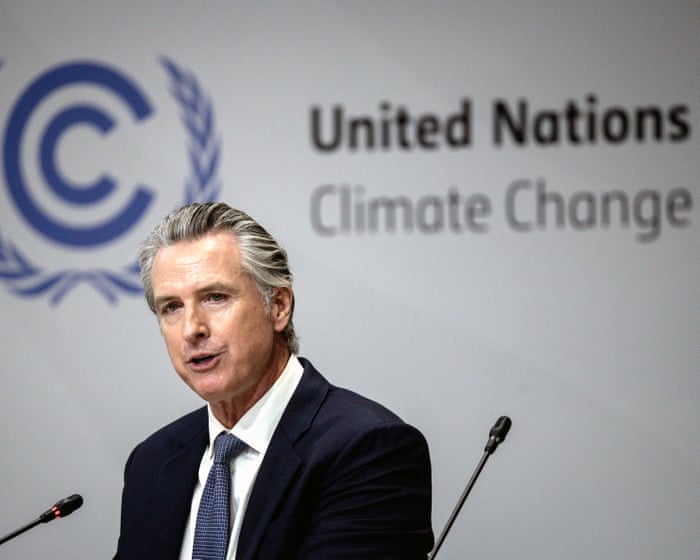
Newsom is the most prominent US politician at Cop31, a process the Trump administration continues to boycott
Astronauts James A. Lovell Jr. and Edwin E. “Buzz” Aldrin Jr. orbited Earth from November 11 to 15, 1966, on Gemini XII, the final mission of NASA’s Gemini program. In addition to successfully completing rendezvous maneuvers and spacewalks, procedures vital to sending American astronauts to the…